South Indian weddings
Kasavu gold, kolam and a morning muhurtham
Invitations built for weddings that begin before sunrise and are over by noon — with the muhurtham window, the sadhya, and every card readable in Malayalam, Tamil, Telugu and Kannada.
South Indian weddings run on a different clock from the rest of the country. The muhurtham is often early morning — sometimes before six — the ceremony itself can be under an hour, and the sadhya follows rather than a late-evening reception. A card designed around a north Indian evening baraat gets the shape of the day wrong.
These designs assume that shape: a muhurtham window rather than an evening start, the meal as something guests need told about, and typography that handles Malayalam, Tamil, Telugu and Kannada script properly rather than as an afterthought.
How the day usually runs
Varies by community and state; this is the common shape for a Kerala or Tamil wedding.
| When | What the card needs | |
|---|---|---|
| Nischayam / betrothal | Weeks earlier | Its own card, smaller list |
| Mehendi or oil bath | The day before | Time and house address |
| Muhurtham | Early morning, often 5–11 a.m. | The window, the mandap or hall, and when to arrive |
| Sadhya | Immediately after | That it is served, and roughly when |
| Reception | That evening or the next day | Time, venue, and that it is the wide invitation |
Muhurtham windows, and early ones
A 5:30 a.m. muhurtham is normal and needs saying clearly, with an arrival time — guests will otherwise plan for a mid-morning start.
Kasavu, kolam and brass
Off-white and gold zari, temple silhouette, nilavilakku flames. Borders that draw themselves like thread on a loom.
Malayalam, Tamil, Telugu, Kannada
Rendered properly — the chillu characters and conjuncts that break in most web fonts are handled, which is where South Indian cards usually fail.
Separate counts for sadhya and reception
The two numbers are rarely the same, and the sadhya count is the one the cook needs first.
Directions to the mandapam
A map link that opens in the guest's own phone — useful when several halls in a town share a name.
Add to calendar
For a 5:30 a.m. muhurtham this is not a nicety. Guests set an alarm off it.
A Kerala muhurtham card, bilingual
Full Malayalam wording, in script and transliteration, is in our Malayalam invitation guide.
॥ ശ്രീ ഗണേശായ നമഃ ॥
ഞങ്ങളുടെ മകൾ മീരയുടെ വിവാഹം
അർജുൻ നുമായി
2026 നവംബർ 27 വെള്ളിയാഴ്ച
രാവിലെ 10:30 – 11:15 മുഹൂർത്തത്തിൽ
Meera & Arjun
Friday, 27 November 2026
Muhurtham 10:30 – 11:15 a.m.
Sree Krishna Kalyana Mandapam, Marine Drive, Kochi
Sadhya from 11:30 a.m.
താങ്കളുടെ സാന്നിധ്യവും അനുഗ്രഹവും പ്രതീക്ഷിക്കുന്നു.
Designs that suit a South Indian wedding
Kasavu was drawn for Kerala. Sindoor is the deeper, more ornamented alternative.
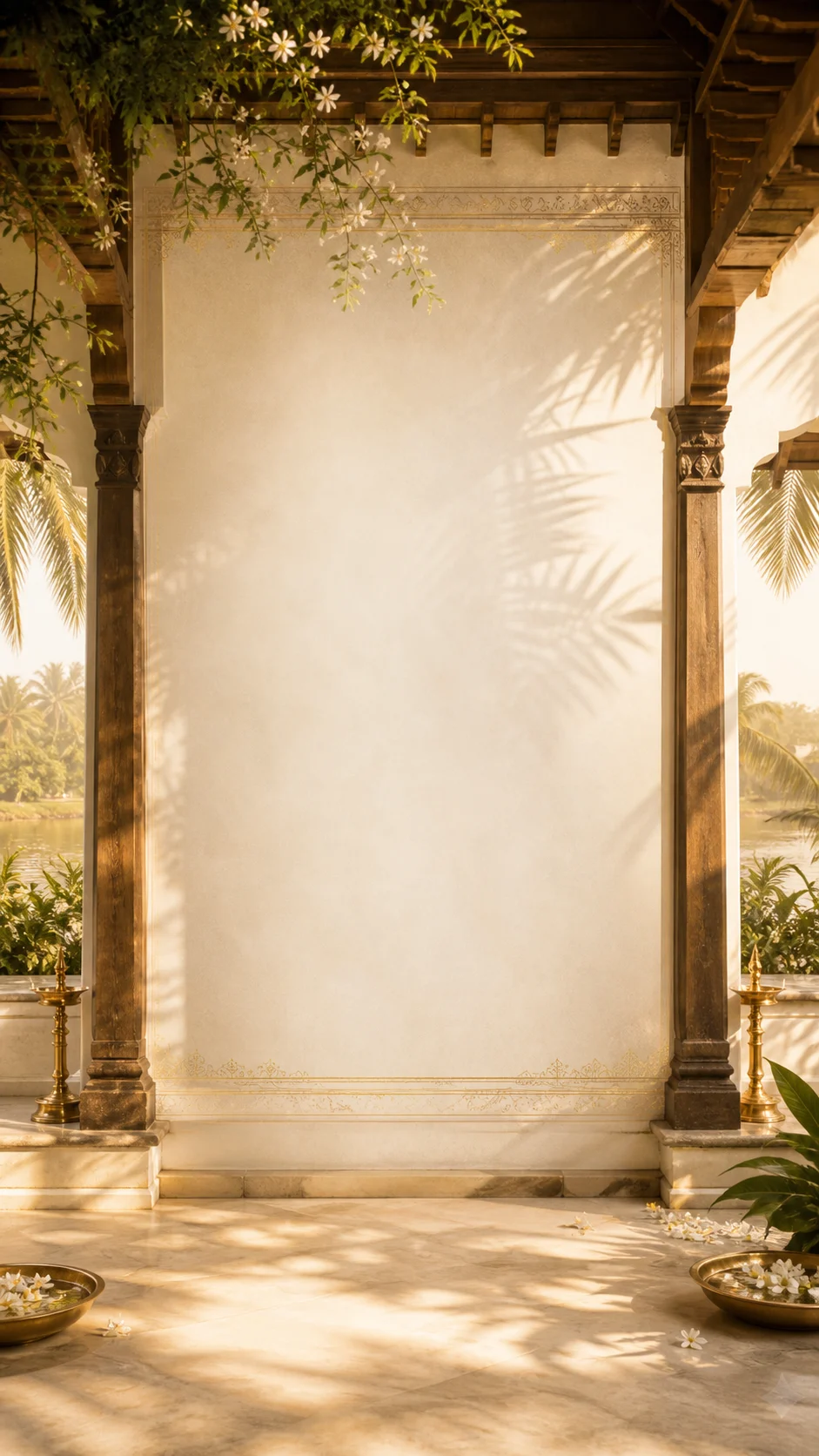 KasavuThe Golden CourtyardA sunlit handloom invitation alive with swaying palms, jasmine, brass lamps and wind-lifted Kasavu cloth. The golden thread leads from ceremony to celebration.Open the preview
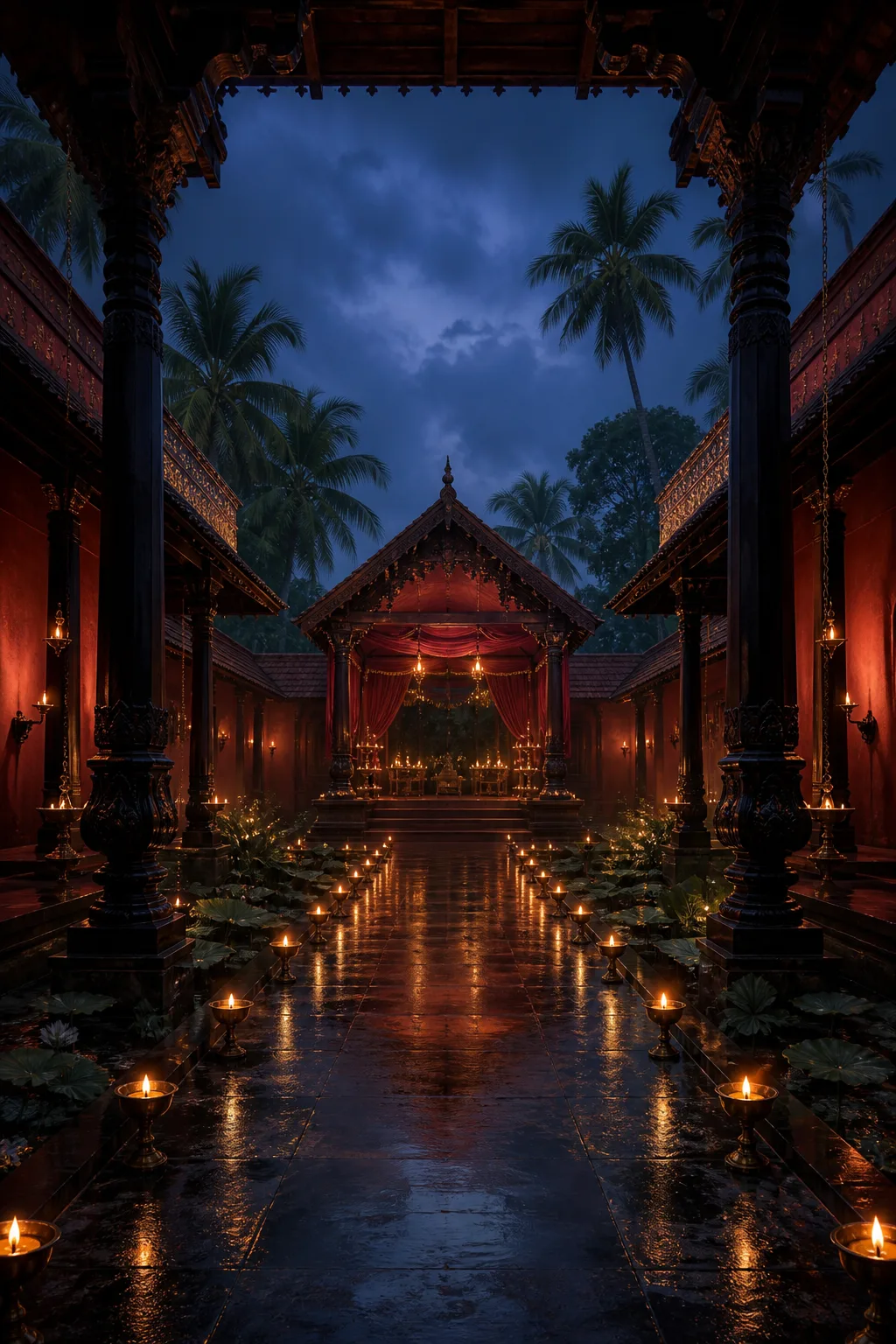 SindoorThe Scarlet CourtyardA rain-lit Kerala mandap alive with vermilion silk, carved teak, marigold torans and breathing brass lamps. A sacred thread carries every celebration through the flower corridor.Open the preview
Points worth getting right
- Print the muhurtham as a window, and add an arrival time if it is early. "Muhurtham 5:30–6:15 a.m., please be seated by 5:15" saves everyone a phone call.
- Say that the sadhya is served and roughly when. Guests travelling from out of town plan the whole morning around it.
- Keep addresses, dates and phone numbers in English even on a Malayalam or Tamil card — people copy them into maps and dialpads.
- Give the native place of both families. In Kerala and Tamil Nadu it is read as part of the introduction, not as an address.
- If relatives are travelling from the Gulf, mark the times IST and say which days they need to be in town.
What it costs
| Price | What it includes | |
|---|---|---|
| Build and preview | Free | Any design, your own details, previewed as guests will see it |
| Publish | ₹499 one-time | No watermark, unlimited guests, RSVP and guest list |
| Custom link | ₹100 one-time | Your names in the address instead of a code |
Questions
- Does the card render Malayalam and Tamil properly?
- Yes. The conjuncts and chillu characters that break in most web fonts are handled, which is the usual failure mode for South Indian text on the web.
- Can I send the same link in two languages?
- Yes. The invitation renders in whichever of twelve languages the reader has chosen, from one link — so older relatives and cousins abroad can read the same card differently.
- Can I show the muhurtham as a range?
- Yes, and you should. A single time is why guests arrive as the ceremony is ending.
- Is there a countdown for an early-morning ceremony?
- Yes, and guests can add each function to their own calendar — which for a 5:30 a.m. muhurtham is the feature that actually gets people there.
Read next
Try it with your own muhurtham
Open Kasavu, put your functions and the sadhya in, and see how it reads.